

A Personal Reflection on SORE: Wife from the Future

There are films you watch, and then there are films that quietly move into your life and sit there for a while, refusing to leave. SORE: Wife from the Future is firmly in the latter category for me. It is not loud, not flashy in the conventional sense, and certainly not obsessed with explaining itself. Instead, it lingers like a memory you’re not sure is real, but you feel it anyway.
Before watching this film, I never truly imagined that an Indonesian filmmaker would deliver something this intimate, this daring, and this emotionally layered within a genre as fragile as science-fiction romance. Time travel stories are notoriously difficult to get right. One wrong step, and the entire narrative collapses under its own rules. Yet SORE doesn’t try to dominate time, it treats it as something human beings can barely touch, let alone control.
What struck me first wasn’t the sci-fi concept, nor the foreign setting, nor even the romance. It was the tone. From the opening moments, the film announces that it is not interested in spectacle for spectacle’s sake. There is a sense of quiet unease, of something already broken before we even know what the story is about. The pacing is deliberate, sometimes even repetitive, but never careless. It asks for patience and rewards it generously.
Act One: Jonathan — A Man Stuck Without Realizing It
The first act belongs entirely to Jonathan. We see the world through his eyes, his routines, his silences, and his unresolved weight. He is a photographer living in Croatia, preparing for an exhibition, but emotionally, he feels suspended. He moves forward in life only on the surface. Beneath that, he is stagnant trapped in habits, fears, and wounds he doesn’t know how to confront.
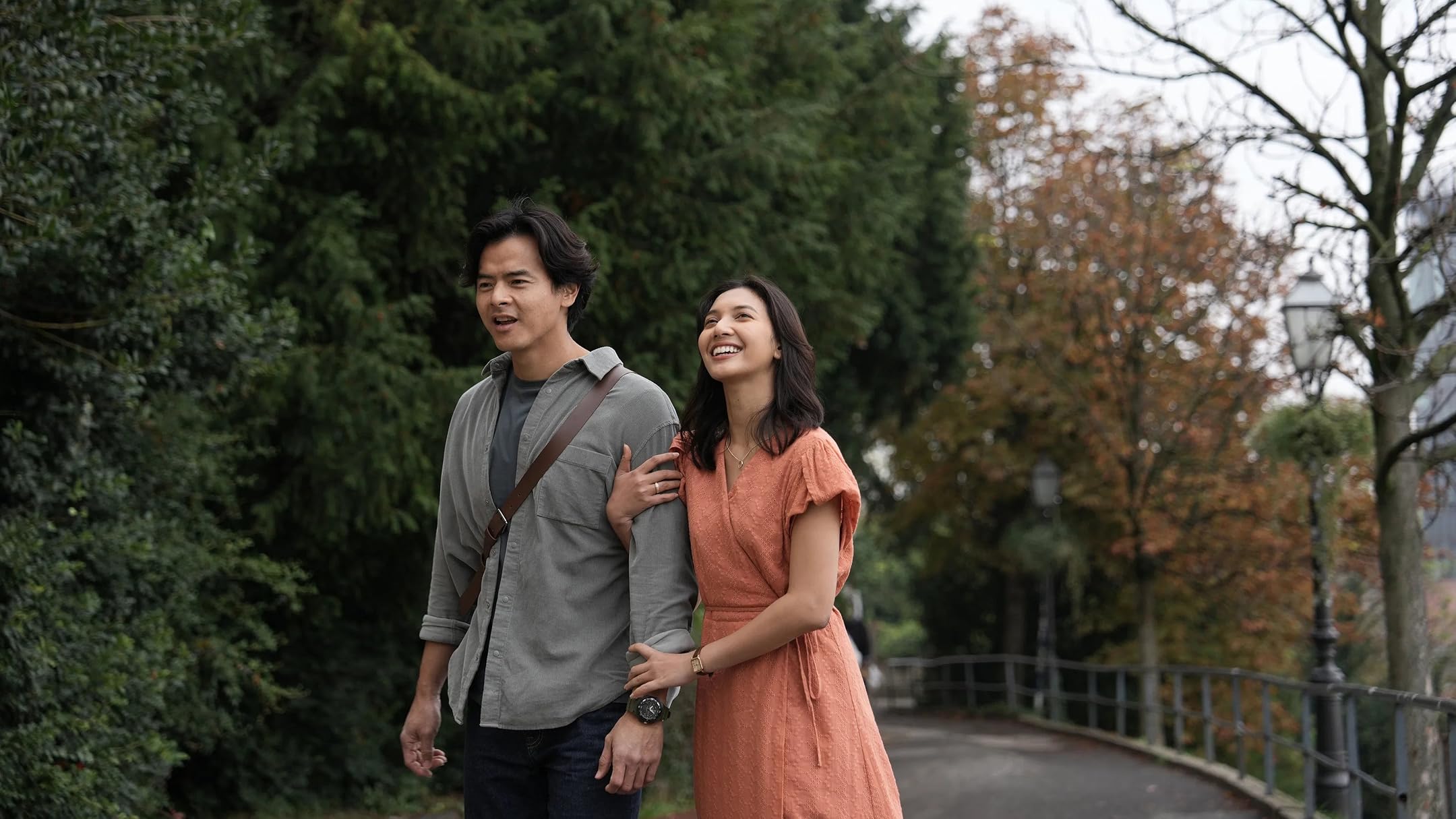
Jonathan isn’t portrayed as heroic or extraordinary. In fact, his ordinariness is essential. He is awkward, stubborn, and sometimes emotionally unavailable. There’s a quiet selfishness in how he navigates his life, not out of malice, but out of survival. He avoids pain by refusing to look at it.
Then, suddenly, his reality is disrupted by the presence of a woman who should not be there.
He wakes up beside Sore.
She is calm, whereas he is confused. Certain where he is defensive. She claims something impossible with a gentleness that makes it even more unsettling, that she is his wife, arriving from a future he has yet to live.
Jonathan’s reaction is exactly what you’d expect from someone grounded in logic: denial, suspicion, and frustration. And the film allows us to sit in that discomfort. It doesn’t rush his acceptance. Instead, it leans into his disbelief, making it the emotional backbone of the first act.
This is where the film subtly establishes its first theme: we often reject love not because it isn’t real, but because we are not ready to face what it demands.
Act Two: Sore — Love That Exists Before Proof
If the first act is about resistance, the second act is about devotion.
Sore is, without exaggeration, the soul of this film. What makes her character extraordinary is not the time travel aspect, but how she embodies love through presence rather than explanation. She doesn’t chase Jonathan loudly. She doesn’t force herself into his life aggressively. She simply stays.
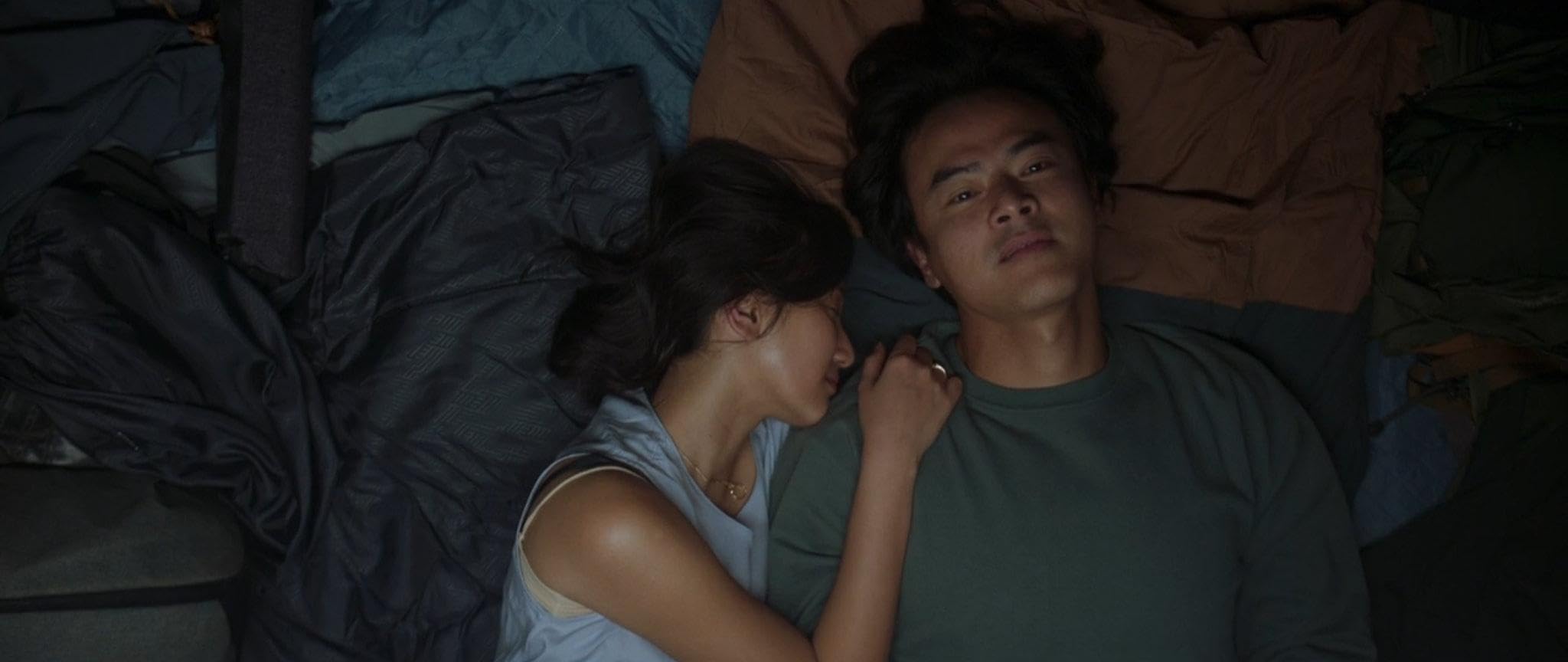
She follows him, not in a creepy or invasive way, but with an almost childlike tenderness. There’s something deeply adorable about the way she observes him, mirrors his routines, and quietly adjusts herself around his life. Her affection is visible in her eyes, in how she stands slightly behind him, in how she waits instead of demands.
Her love feels practiced, as if she has loved him for years already, which, in her reality, she has.
What truly moved me was how much care she shows without ever asking for credit. She remembers things Jonathan doesn’t even realize matter. She anticipates his emotional walls. She accepts his flaws without trying to reshape him into something else.
And yet, beneath that warmth, there is desperation.
Because Sore is not just visiting the past, she is fighting against it.
The film slowly reveals that her presence is not a romantic coincidence but a mission driven by sacrifice. She repeats moments. She resets time. She endures emotional exhaustion not to win Jonathan’s love, but to save him from himself.
This is where the repetition becomes meaningful. Scenes replay not to show clever storytelling tricks, but to underline the emotional toll of loving someone who cannot yet change.
Unlike other time-loop films, where repetition builds hope, SORE uses repetition to create uncertainty. Each reset feels heavier than the last. Each attempt drains Sore further. And each failure makes us question whether love alone is ever enough.
Act Three: Time — The Unforgiving Observer
The final act belongs not to Jonathan or Sore, but to time itself.
This is where the film truly distinguishes itself from other sci-fi romances. Time is not portrayed as a puzzle to be solved or a villain to be defeated. It is neutral. Unmoved. Unfair.
What becomes painfully clear is that time will not bend just because love exists.

Sore’s repeated sacrifices lead her to a devastating realization: some wounds cannot be healed by another person. Jonathan’s trauma, especially the unresolved pain tied to his past, is something he must face alone. No amount of love, patience, or time manipulation can replace personal acceptance.
There is a heartbreaking moment where Sore nearly gives up, not out of weakness, but exhaustion. Watching her break after being so composed for so long is one of the film’s most emotionally brutal sequences. The woman who followed Jonathan everywhere with quiet joy finally collapses under the weight of loving someone who cannot yet meet her halfway.
And this is where the film asks its most difficult question: Is love still meaningful if it cannot change destiny?
The answer the film offers is not comforting, but honest.
Love does not exist to rewrite fate. Sometimes, it exists only to accompany us until we are ready to face it.
Performances That Carry the Film’s Heart

Dion Wiyoko’s portrayal of Jonathan is restrained but deeply effective. He doesn’t overplay the pain. Instead, he lets it leak through his silences, his hesitation, and his inability to articulate what’s wrong. One particular scene involving his father reveals the emotional core of his character, and it lands with devastating impact. You feel his shame, his anger, and his unresolved grief all at once.
But Sheila Dara’s performance as Sore is something truly special.
She doesn’t rely on dramatic monologues or overt expressions of emotion. Her strength lies in subtlety. A glance. A pause. A slight change in posture. You believe in her love not because she tells you about it, but because her entire presence is shaped by it.
She is charming without being performative, strong without being loud, and vulnerable without being fragile. Even her moments of joy feel layered with sadness, as if she already knows what awaits her. Their chemistry feels organic, not manufactured. It grows slowly, painfully, and honestly.
Visuals, Sound, and Emotional Atmosphere
Visually, the film is stunning. The Croatian landscapes are used not as decoration, but as emotional extensions of the story. Vast, wide shots emphasize loneliness. Empty spaces reflect emotional distance. Even stillness feels intentional.
The red visual motifs associated with time resets are particularly effective. They feel natural rather than artificial, adding tension without overwhelming the scene.
The music deserves special mention. Instead of merely supporting the visuals, it often becomes inseparable from them. Certain songs feel permanently fused to specific emotions, making it impossible to think of one without recalling the other. At times, the music is dominant, but never careless. It amplifies longing rather than distracting from it.
The Ending: Acceptance Over Control
The final sequence of the film is where everything comes together.
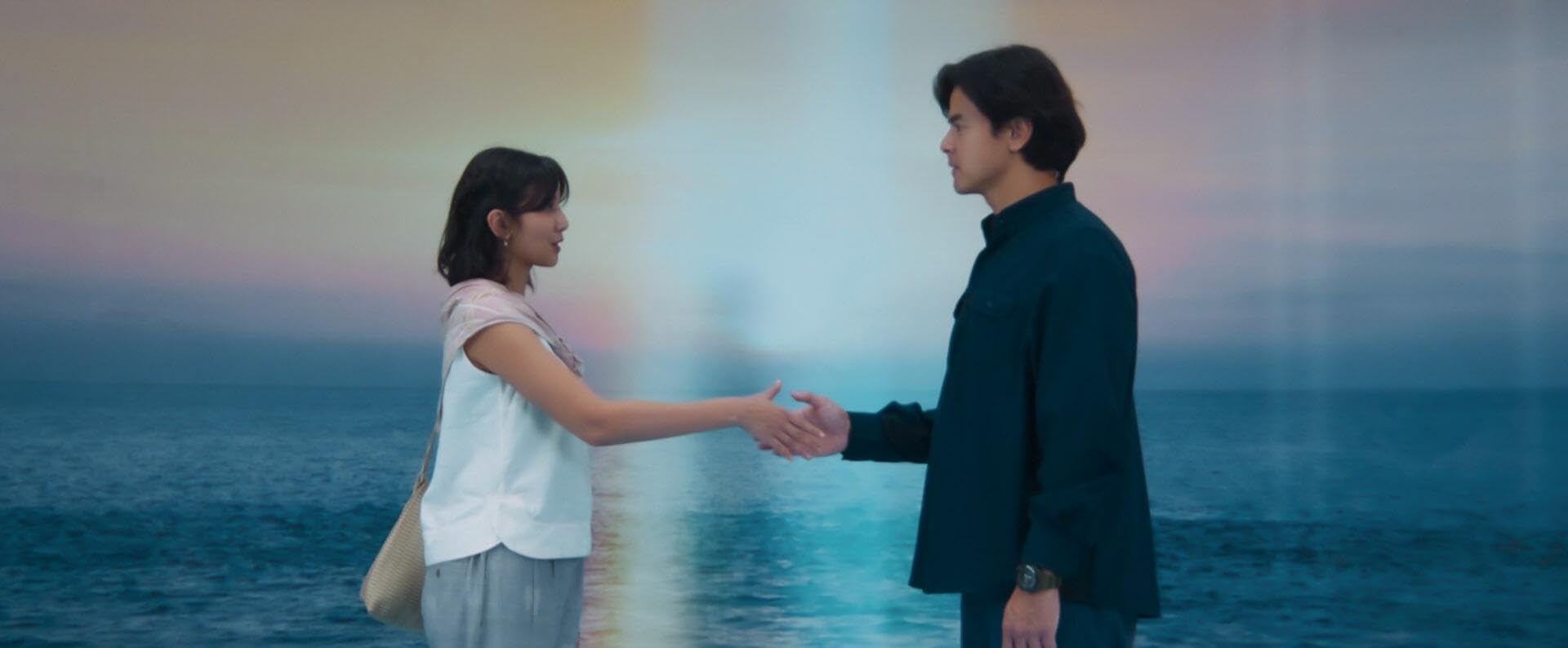
The imagery, the silence, the fleeting gestures, all lead toward an ending that doesn’t offer easy closure, but emotional truth. The final moments, particularly the symbolic handshake and fragmented memories, feel timeless. They suggest connection without possession, love without certainty.
What stays with me most is the film’s refusal to promise permanence.
It suggests that even if love does not last forever in the way we want it to, it still matters. It still shapes us. It still leaves something behind.
Final Thoughts

SORE: Wife from the Future is not just a romantic sci-fi film. It is a meditation on patience, sacrifice, and the limits of love. It dares to suggest that acceptance, not control, is the ultimate form of devotion.
This film expands what Indonesian cinema can be. It proves that local filmmakers can tell globally resonant stories without abandoning cultural sensitivity or emotional depth.
For me, SORE isn’t flawless, but its imperfections feel human. And that, perhaps, is its greatest strength.
If love is about daring to feel deeply, even when the outcome is uncertain, then SORE understands love better than most films ever will.
Comments