
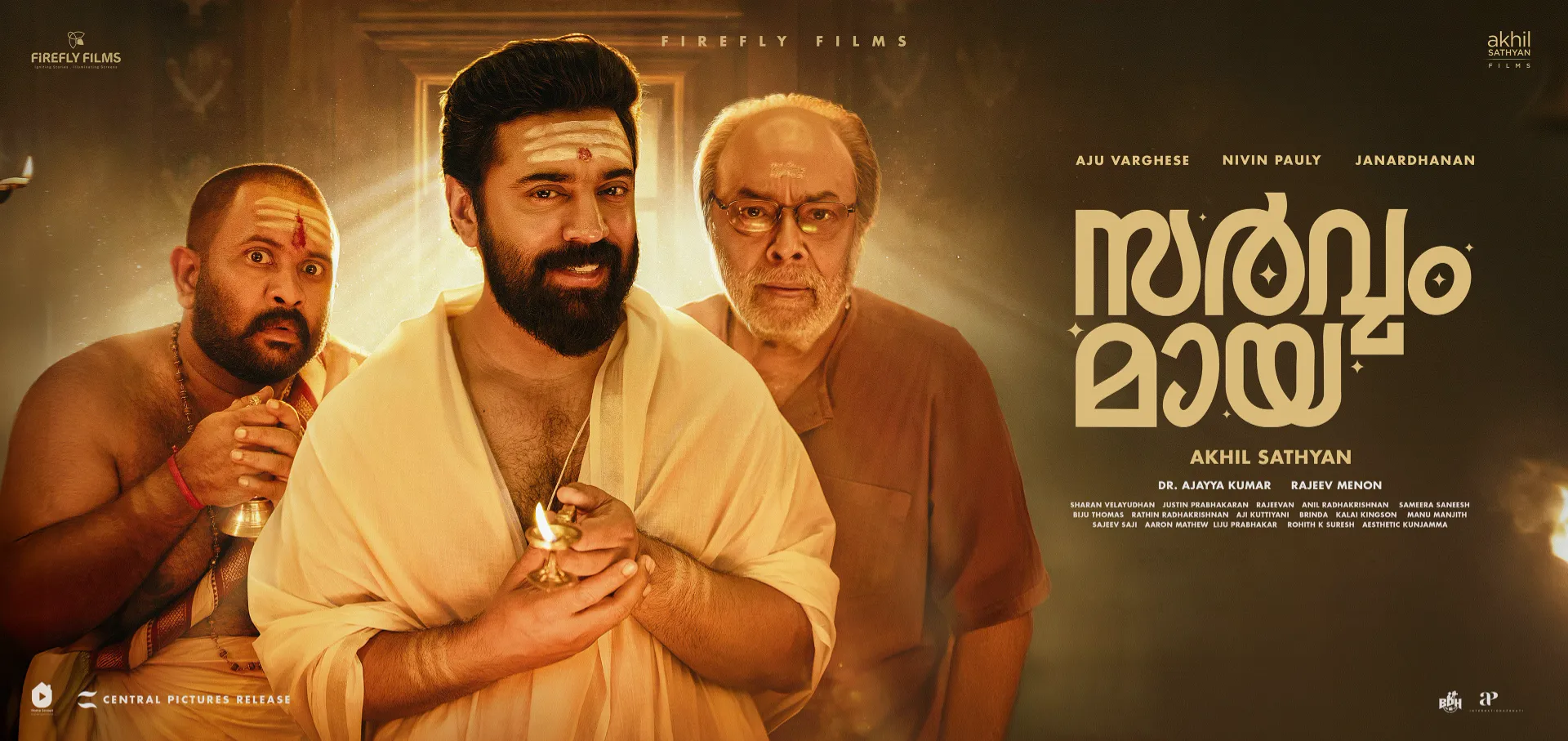
I walked into Sarvam Maya without much expectation. By the time the end credits rolled, I wasn’t blown away, but I was smiling. And honestly, that says a lot. This isn’t Nivin Pauly’s strongest film by any metric, but it’s one of those movies that quietly grows on you while you’re watching it. You laugh more than you expect, you relax into its rhythm, and when it ends, you feel… lighter.
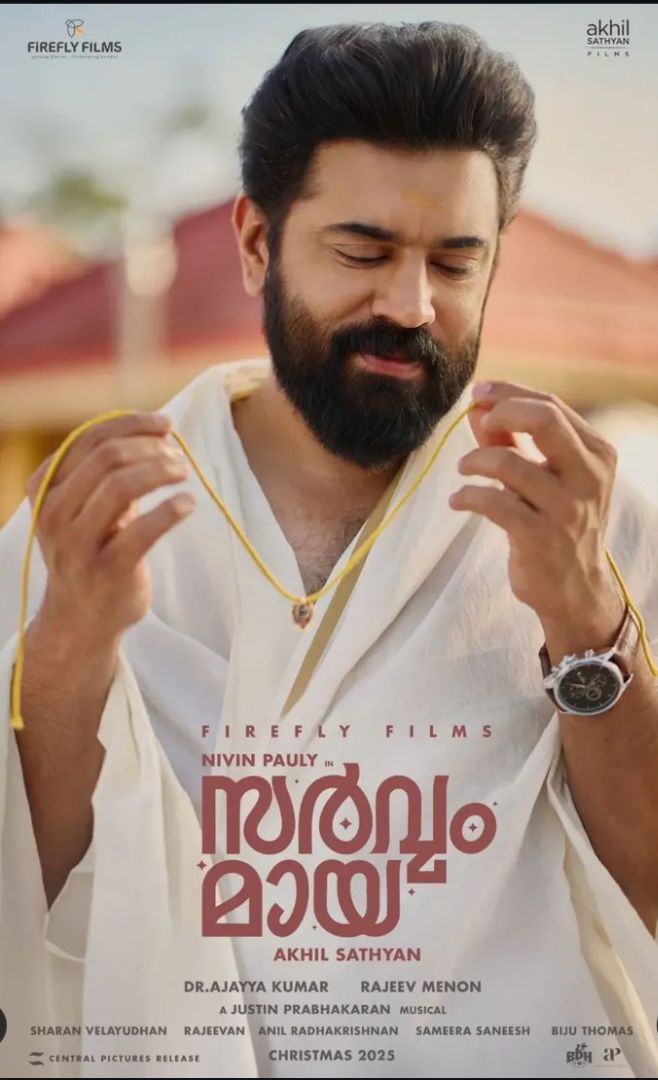
There’s a certain comfort to films like this. They don’t rush. They don’t shout. They unfold gently, almost lazily, in familiar spaces, tiled ancestral houses, quiet temples, village roads that look like they’ve existed forever. Sarvam Maya clearly comes from that Sathyan Anthikad school of filmmaking, the kind that treats everyday life as cinema, where emotions breathe slowly and humour comes from observation rather than punchlines. Akhil Sathyan carries that legacy forward here, making a film that feels less “constructed” and more “lived in.”
Nivin Pauly feels like home
Nivin Pauly slips into Prabhendu like he never left this space. There’s something deeply reassuring about watching him in ordinary surroundings, arguing with family, struggling financially, questioning himself, cracking silly jokes, and trying to figure life out. He makes you believe that he belongs there, not as a “hero”, but as a confused, wounded, slightly lost human being.
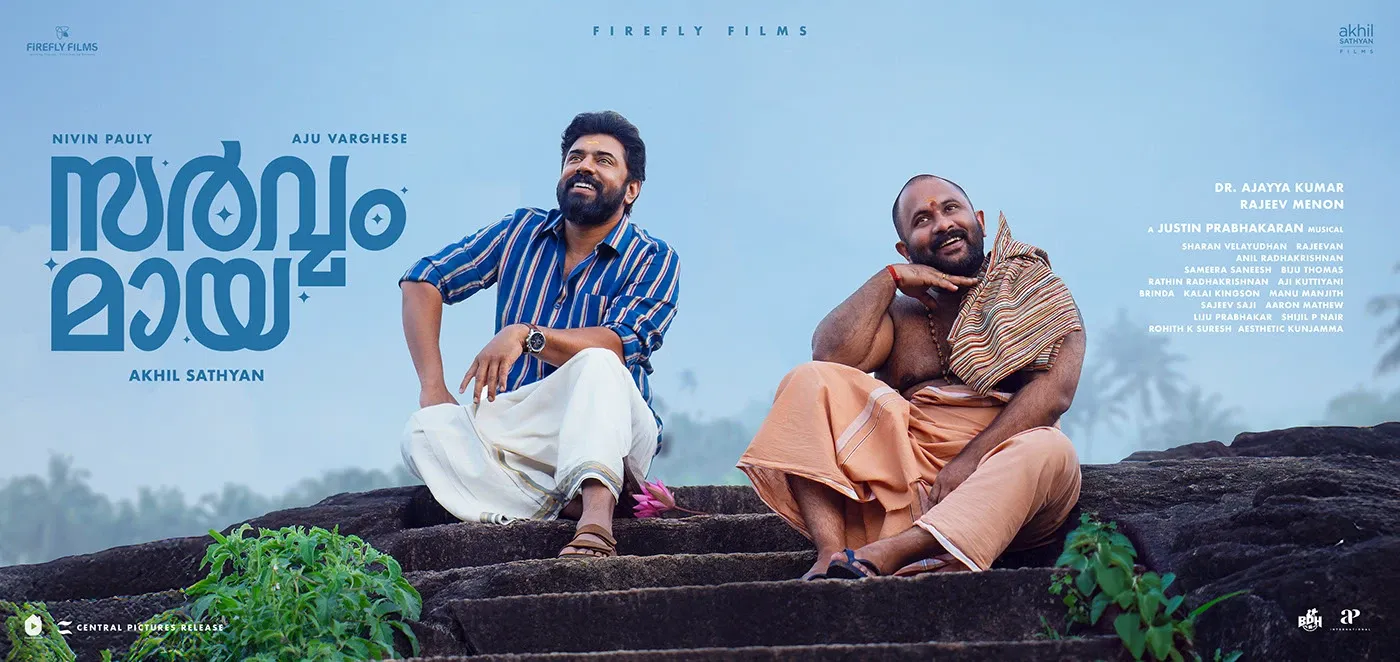
His chemistry with Aju Varghese is exactly what you expect, effortless and warm. Their banter feels lived-in, not rehearsed. But the real surprise here is Riya Shibu. Her Delulu is not your typical Malayalam “yakshi” template. She’s playful, awkward, slightly clueless, and refreshingly modern in her expressions. The fact that she’s a fresh face adds genuine novelty, she doesn’t bring familiar screen baggage, so her ghost feels like someone we are meeting for the first time, not a recycled trope.
A ghost story that wants to heal, not haunt

Despite the premise, Sarvam Maya isn’t trying to scare you. The ghost here is more of a quiet catalyst, someone who pushes Prabhendu toward reconnecting with his family, his faith, and most importantly, himself. The supernatural element becomes a tool to talk about emotional repair, regret and belonging rather than fear. It keeps the film gentle, but it also makes parts of the narrative feel familiar and predictable.
The film flirts with themes like atheism, ritual, generational guilt, emotional distance and creative frustration, but never fully commits to exploring any of them deeply. It prefers to remain safe, choosing emotional warmth over dramatic complexity. You can feel the intention, but also the hesitation.
The second half loses some momentum
The first half flows smoothly, but the latter portion stretches itself thin. Some emotional beats are sincere but overextended. Certain scenes linger longer than they need to, while a few narrative shifts feel rushed, especially in the final act, where the film knows where it wants to go but takes its time getting there. A handful of characters are introduced with promise and then quietly fade away. Preity Mukundan’s character, in particular, feels like she exists more to tick a narrative checkbox than to add emotional weight. There are many faces, but not all of them leave an imprint.
Palakkad as more than just a location
Visually, Sarvam Maya is a calm, warm watch, and Palakkad is a big reason for that. The wide paddy fields, slow village mornings, tiled roofs, temple corridors and dusty roads feel less like scenic backdrops and more like emotional extensions of the film itself. There’s a stillness to these visuals that mirrors Prabhendu’s inner state, stuck, hesitant, but quietly searching.
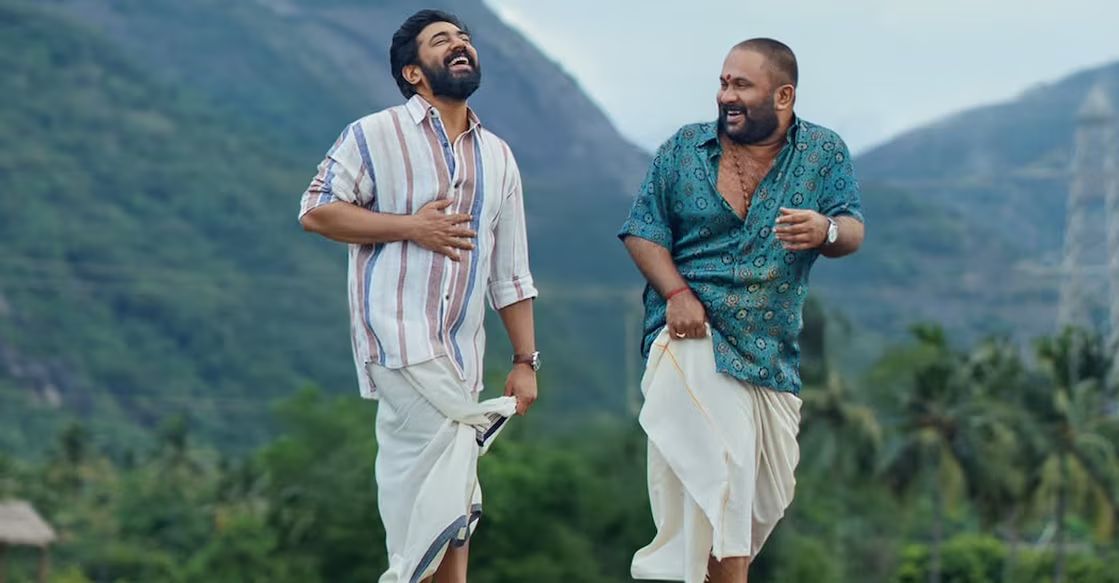
The frames are clean and unforced, relying on natural light and earthy tones. It doesn’t chase cinematic spectacle, but it creates an atmosphere you settle into, much like the film’s mood.
Editing, sound and music
Akhil Sathyan, along with editor Rathin Radhakrishnan, keeps the edit deliberately unhurried. The film breathes, sometimes beautifully, sometimes excessively, but it never feels chaotic. The pacing reflects the film’s philosophy: slow, observant, and rooted in everyday rhythm.
Justin Prabhakaran’s music gently supports the narrative. The songs don’t scream for attention, but they linger, especially in quieter moments where they amplify emotion without overpowering it. The background score stays restrained, letting silence and ambient village sounds carry much of the mood.
The emotional core
What the film quietly does well is its handling of guilt and emotional distance. Prabhendu isn’t painted as a tragic hero, he’s simply someone who walked away from home too early, carried that distance for too long, and doesn’t know how to bridge it anymore. The ghost doesn’t magically fix his life; she only nudges him toward looking back at what he left behind. The healing, when it comes, feels earned rather than convenient.
There are moments, especially in the final stretch, that lean into sentimentality. Some of them work beautifully, some feel a little staged. But even in its weakest moments, the film remains sincere. It never feels cynical or manipulative.
What stays with you
Despite its flaws, Sarvam Maya has heart. It gently reminds you of the emotional blind spots we all carry, the people we push away, the things we postpone, and the quiet need to feel understood. It doesn’t lecture you. It simply places a mirror in front of you and lets you decide what you want to take from it.
Final thoughts
Sarvam Maya isn’t a film that aims to impress you. It wants to comfort you. It wants to sit beside you rather than stand in front of you. It stumbles in places, drags in others, but it never loses its sincerity.
Not a classic. Not a misfire. Just a warm, imperfect, honest little film that quietly reminds you why Nivin Pauly once made going to the movies feel like coming home.


Comments