

In this review of The Lunchbox, I explore how the film’s open-ended storytelling, quiet emotions, and subtle sound design come together to create a deeply moving experience. Through the journey of two lonely souls connected by a simple lunchbox, the film reminds us that love and companionship can arise in the most unexpected ways. Join me as I reflect on the film’s narrative, characters, and the small details that make it unforgettable, along with why its ending stays with you long after the credits roll.
A Beautiful Open Ending: Why It Matters
Some movies leave the ending open, allowing the audience to interpret what might have happened. This approach gives viewers the freedom to imagine different possibilities and create their own versions of the story. I believe this is a powerful storytelling tool for three key reasons:
Most people tend to forget a movie once they’ve watched it unless it touches something deeply personal. But when a film ends ambiguously, it lingers in the viewer’s mind. They keep thinking about the story, piecing together how it might have ended, and it stays with them long after the credits roll.
Open-ended films create a deeper connection with the audience. Since viewers are invited to fill in the gaps, they feel like they are part of the storytelling process, shaping the narrative in their own way.
Films with sad or disappointing endings are often hard to watch again. After all, who wants to relive pain, unless there’s some deeper psychological reason? Open endings, on the other hand, offer viewers the chance to explore multiple outcomes, keeping their curiosity alive without forcing them to face despair repeatedly. The Lunchbox is one such film that leaves the ending open, inviting the audience to imagine their own version of how the story concludes. Since this is a review, there will be spoilers, so feel free to skip this article and return to it after watching the film

I usually end up watching popular or hyped films much later than most people. I like to experience a movie with a fresh mind, free from the influence of reviews and opinions floating around. That’s why The Lunchbox, directed by Ritesh Batra, stayed off my radar for a while. Recently, I was rewatching Karwaan, and when I saw Irrfan Khan on screen, The Lunchbox immediately came to mind. After finally watching it, I was blown away. What an incredible actor, so full of nuance and subtlety. His passing is a tremendous loss not only to Indian cinema but to the world film industry. His absence feels irreplaceable.
The Story: How a Mistake Sparks a Connection
The film begins by introducing Nila, a typical Mumbai suburban housewife played by Nimrat Kaur, who tries to add extra flavor to her husband’s lunch in an attempt to bring more joy to their relationship. The lunchbox is delivered to her husband’s office by Mumbai’s famous Dabbawalas an intricate and efficient system that transports lunchboxes from homes to offices using trains, porters, handcarts, and more.
During the opening credits, we’re taken on a journey from Nila’s home to the lunchbox’s destination. Along the way, we see the different routes it takes and get glimpses into the lives of the Dabbawalas. Historically, the Dabbawalas are known for their near-perfect delivery system world-famous for their Six Sigma accuracy of 99.999666%, meaning lunchboxes are almost never misplaced or delivered incorrectly. Ironically, the serendipity of the film begins with a delivery mistake made by this very efficient system.
Batra’s film subtly suggests that even if the odds of finding true love in life are as slim as a Six Sigma error, it’s still worth waiting for and worth taking that chance. In Nila’s case, the lunchbox is mistakenly delivered to the office of Saajan Fernandes, played by Irrfan Khan, setting the story in motion.
Saajan is a widower living a lonely, disconnected life. Over time, he has forgotten how to be compassionate or connect with others a fact revealed through small details in the film’s first half. His life is slow and monotonous, until Nila’s lunchbox brings a new rhythm and meaning to his routine.
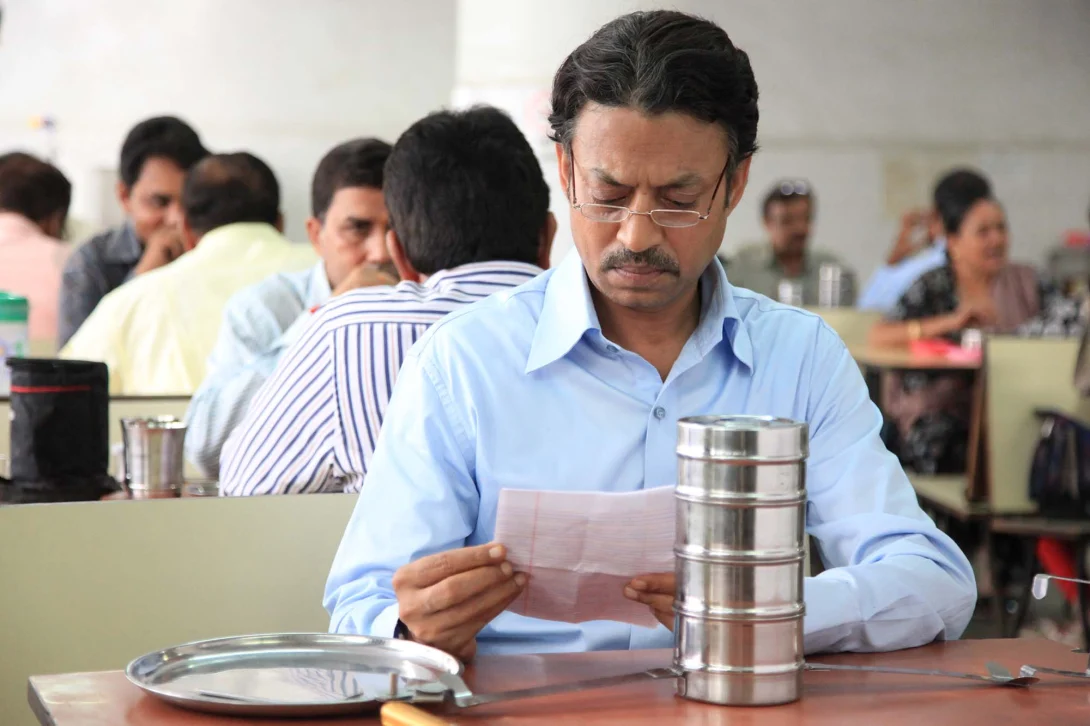
The delivery mishap leads to an exchange of letters between Saajan and Nila through the lunchbox. Both are lonely, wounded souls who find comfort and companionship in their correspondence. Saajan, adrift since his wife’s death, goes through life’s motions without purpose his only thought of the future being early retirement. Nila, meanwhile, is a kind-hearted woman with an adorable daughter, but her husband’s neglect and emotional distance leave her feeling isolated and depressed. Each carries a deep void in their life, and through their letters, they begin to find connection, understanding, and hope.
Later, we are introduced to another character Shaikh, played by Nawazuddin Siddiqui. Shaikh is a young trainee who works at Saajan’s office. Like Saajan, he is an orphan, but unlike him, he has eloped with the girl he loves, choosing to follow his heart. His presence also brings a fresh perspective to Saajan’s otherwise monotonous life, prompting him to reflect more deeply on his own choices and what he truly wants from life.
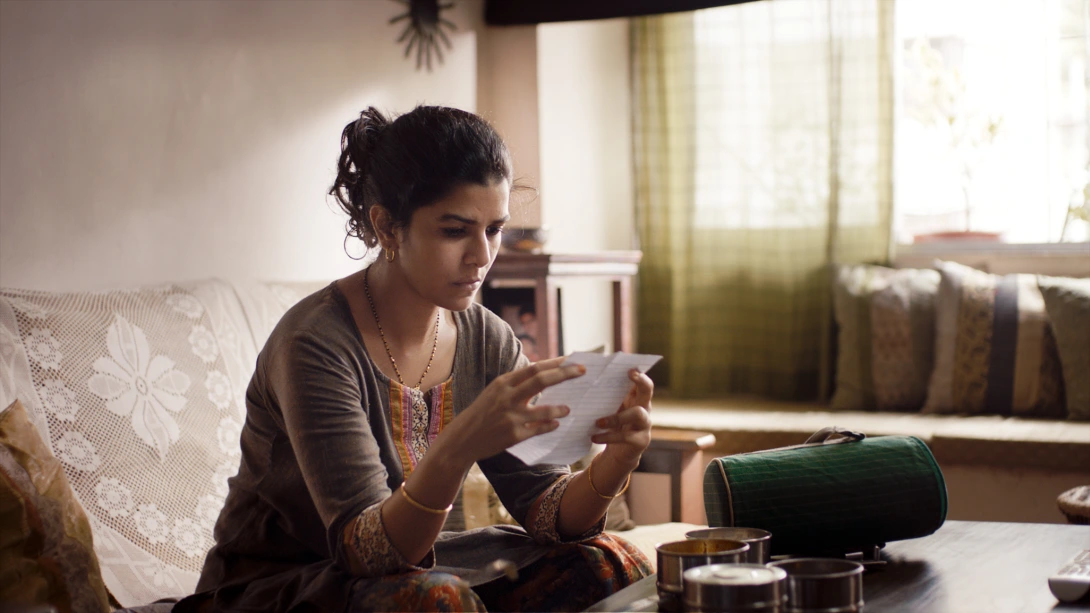
As their exchanges grow, Saajan and Nila become more attached to each other, sharing almost everything through their letters. Nila opens up about her desire to leave the city and escape to Bhutan with her daughter, where the cost of living is much cheaper than in India. Saajan responds by suggesting that they could move there together. Their correspondence becomes a window into their dreams, frustrations, and the emotional support they find in one another.
Towards the end of the film, they decide to meet in a restaurant. However, at the last moment, Saajan calls it off. He feels that he’s too old, while Nila is still young with much more life to explore. Unable to face the meeting, he chooses instead to watch her from afar and writes a letter expressing his feelings quietly letting her go while still holding onto the connection they shared.
Some time later, Nila’s world changes once again when her father, battling lung cancer, passes away under the care of her mother, played by Lillete Dubey. In a quiet, heartfelt conversation, her mother confesses how unhappy her marriage had been and offers Nila a piece of wisdom: “Sometimes, the wrong train takes us to the right station.” The advice stays with her as she tries to figure out her next step.
Determined to find closure, Nila reaches out to the dabbawalas and receives the address of Saajan’s office. But when she arrives, Shaikh informs her that Saajan has already retired and moved to Nashik. Though disappointed, Nila writes a farewell message to Saajan, sharing that she has decided to leave her husband Rajeev and start a new life in Bhutan with her daughter, Yashvi. Meanwhile, as Saajan travels to Nashik, his mind changes. He realizes that leaving Mumbai and the connection he’s built with Nila would be a mistake. He turns back and heads to the city once more.

One of the subtle but powerful elements that elevate The Lunchbox is its sound design. The film’s background score is understated, never overpowering the emotions but enhancing the quiet loneliness of its characters. Everyday sounds, trains rattling through the city, the clatter of utensils, soft footsteps, and distant conversations , create an immersive environment that reflects the rhythm of Mumbai’s life.
The ambient sounds, in particular, mirror the emotional state of the characters. Saajan’s office feels lifeless, with sparse sounds that highlight his isolation, while Nila’s kitchen is full of warm, homely noises that contrast with her internal loneliness. The use of silence at key moments also adds to the film’s realism, giving space for emotions to breathe without forcing melodrama, and to mention the sound of eating foods, like slurps etc.
Ending
As I mentioned at the start of this article, this movie ends on a beautiful open ending. Nila waits at home for Yashvi to return from school, while Saajan makes his way toward her house, accompanied by the familiar dabbawalas who have long carried lunchboxes across the city. The open ending leaves the future to the imagination, just like the unexpected journeys that brought them together.
Comments